
What is the Documentary Project?
In Freestyle Academy, all Junior students need to create an original Documentary in their second semester. Our task is to go out and interview someone’s untold story, and then create a full-fledged article about it. This documentary project spans almost the entire second semester in English class, and also encompasses the majority of the fourth quarter in Digital Media and Animation.
Overall, while there were tedious parts, I loved doing it. Meeting with my interviewee, Dr. Beth Aarhus, to talk about her experience in the chiropractic world was incredibly inspiring.
It’s difficult to describe the experience I went through when crafting the documentary. The process of filming Dr. Beth, setting up dates, crafting an article, creating graphical elements, and other necessary tasks was an adventure. Let me take you through my journey as I learn newfound creative skills through creating my documentary about Dr. Beth and her escape from a chiropractic industry that emphasizes quick treatments over patient well-being.

Crafting the Documentary Essay
We did most of the Documentary process in English class, including planning who we would want to interview. Originally, I wanted to interview my therapist, since he has a unique approach to the discussion of emotions and “parts”, but unfortunately Los Angeles was too far away to interview him in person. I knew that my parents occasionally visited a chiropractor they really like named Dr. Beth Aarhus, so after learning a bit more about her, I scheduled an interview date with her. The interview went really smoothly, and she is such a great storyteller. Before the interview, I wasn’t really sure what I would want the Documentary to be about in relation to chiropractic work, but after the interview was done, I felt a new door had opened for me. I knew exactly what I wanted to write about.

In my article writing process, I wrote about Dr. Beth’s experience living in an industrialized chiropractic firm and how she escaped that retail-style practice and forged her own path. Firstly, I created a “zero draft”, in which one just puts ideas onto the page with no attention to structuring. Later, I moved onto making a rough draft of the article. I used the Graphic Organizer and parts of my zero draft to create something coherent. Through the process, I researched lawsuits, articles, scientific studies, and other information relating to chiropractic work, and it was all fascinating. After compiling everything into a rough draft, I went through many revisions, forming a final draft. I am grateful that I managed to find such a good interviewee to give myself insight into her perspective, because this made the process comforting to delve into.
Crafting the Documentary Article
In Digital Media, we learned Adobe InDesign to create a full-fledged article. In my opinion, InDesign is similar to Adobe Illustrator in that they are both heavily vector-based, but InDesign has a higher focus on text formatting while Illustrator focuses on graphic elements. The process of creating my article wasn’t too difficult; I used Illustrator to create some graphic design elements, such as a few spine illustrations, and the rest of the graphic elements I did in InDesign because they were then just blobs. I also used Photoshop to brighten the pictures I took of my interviewee. For the overall color scheme, I chose a pre-made Adobe medical-related color scheme. I used this color scheme throughout all my illustrations and backgrounds. The Documentary article was an absolute blast to make.
Of course, things don’t always go as planned. In the middle of Sunday night, the date of publication, my parents woke me up because it turns out the final exported package had an error on the publication side. Strangely though, I had no error. I spent an hour trying to figure out what the issue was, and it turned out there was some corruption in one of my fonts. I managed to fix the issue and submitted it to be published just in time.
Without that little blemish in the end, this Documentary article process would have been a perfectly wonderful experience. But in any case, those little imperfections make something memorable.
Animated Documentary Project
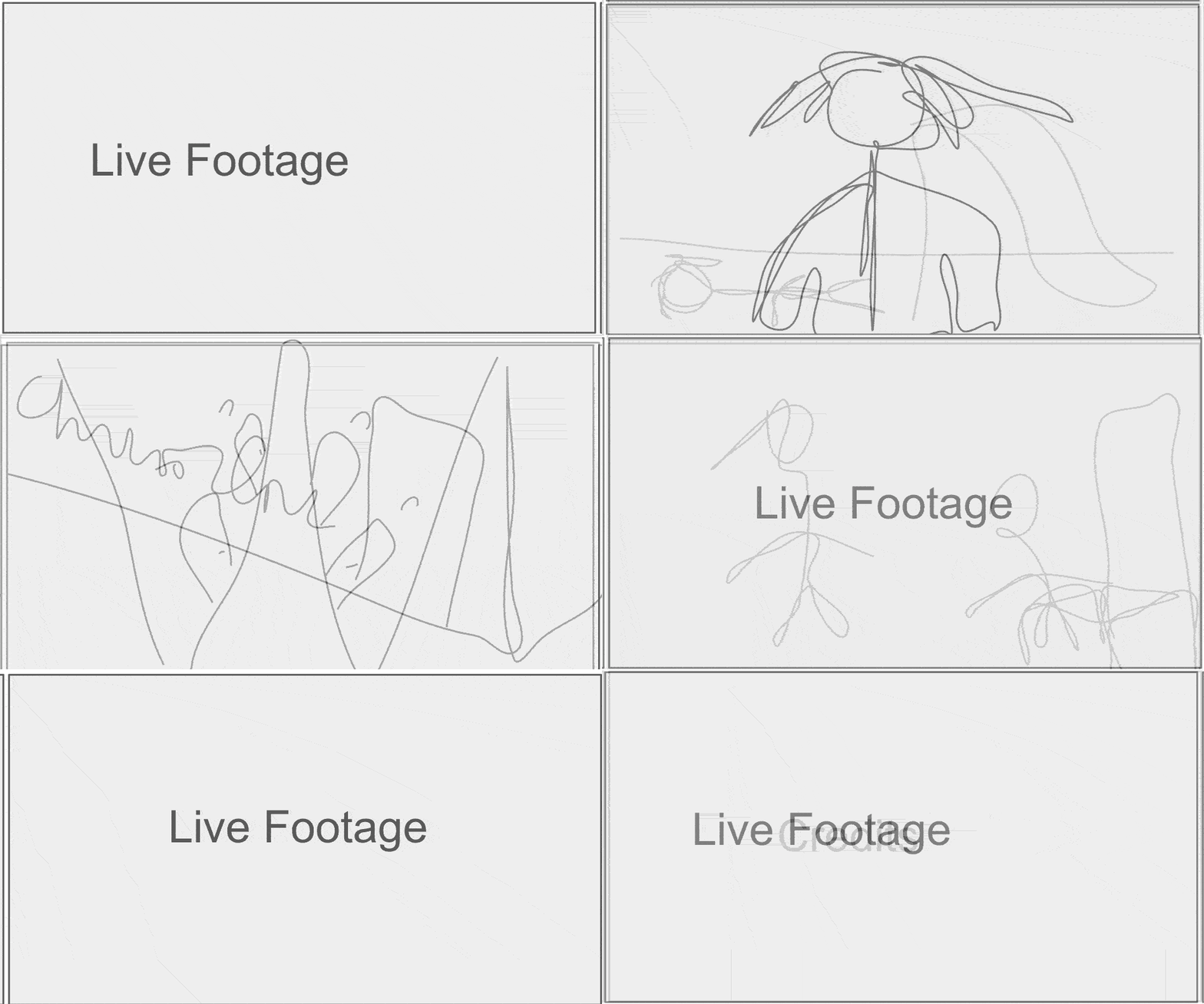
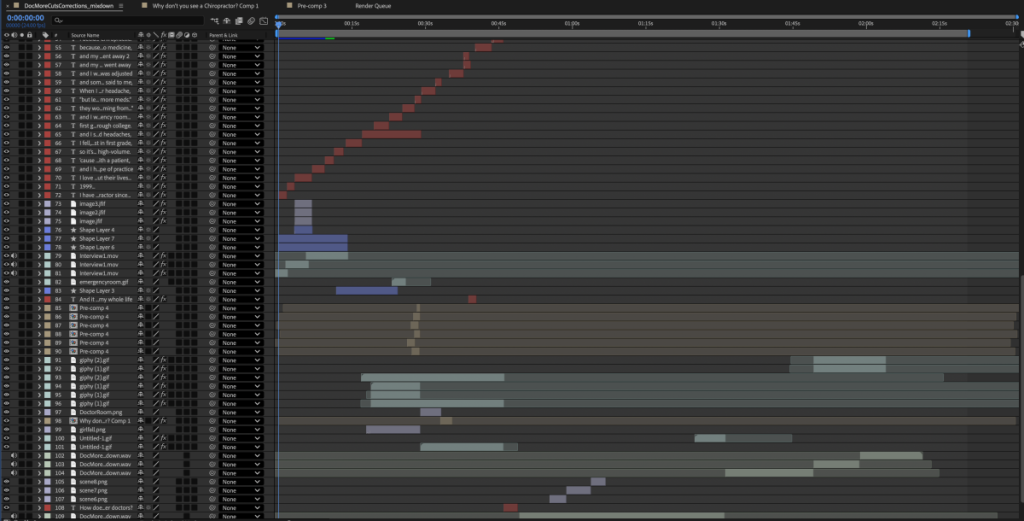
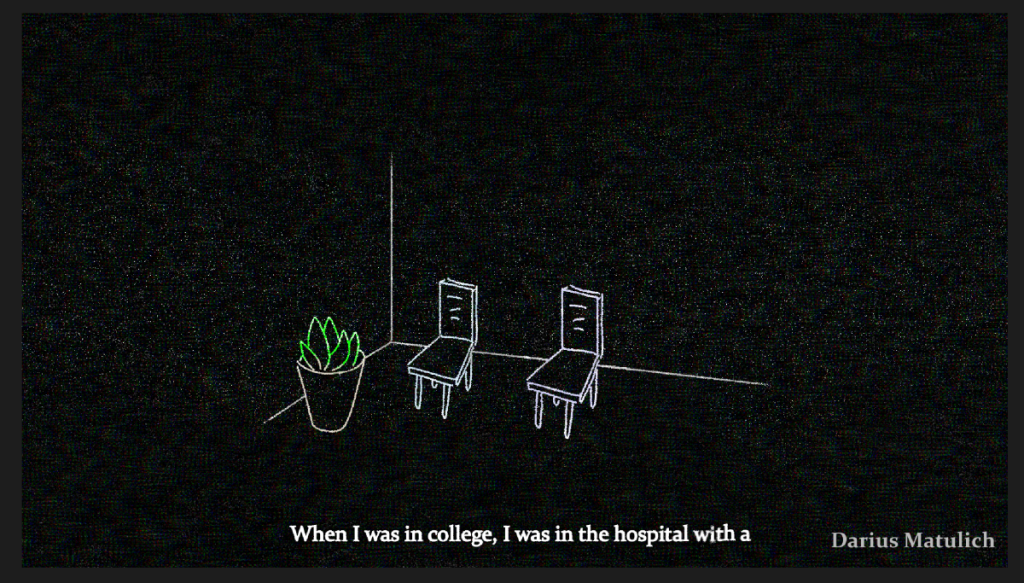
In our Animation class, we were tasked to use the footage from our interviews and use them to create a short animation. Since the animation had to be short, I decided to focus on two specific topics: Dr. Beth becoming a Chiropractor, and her experience inside the factory-like workforce.
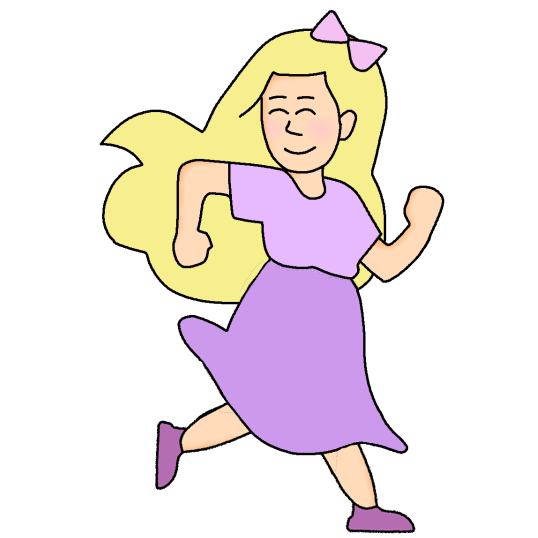
I generally tried to keep the animation simple, though I admit that it was rushed in some places. We didn’t have much time to create the animation, so I had to cut corners. If I had more time, I would look to polishing up the animations and creating an actual character instead of just a pink stick figure. I actually had a character planned in mind, but it was too complicated for the time given that I eventually scrapped it.
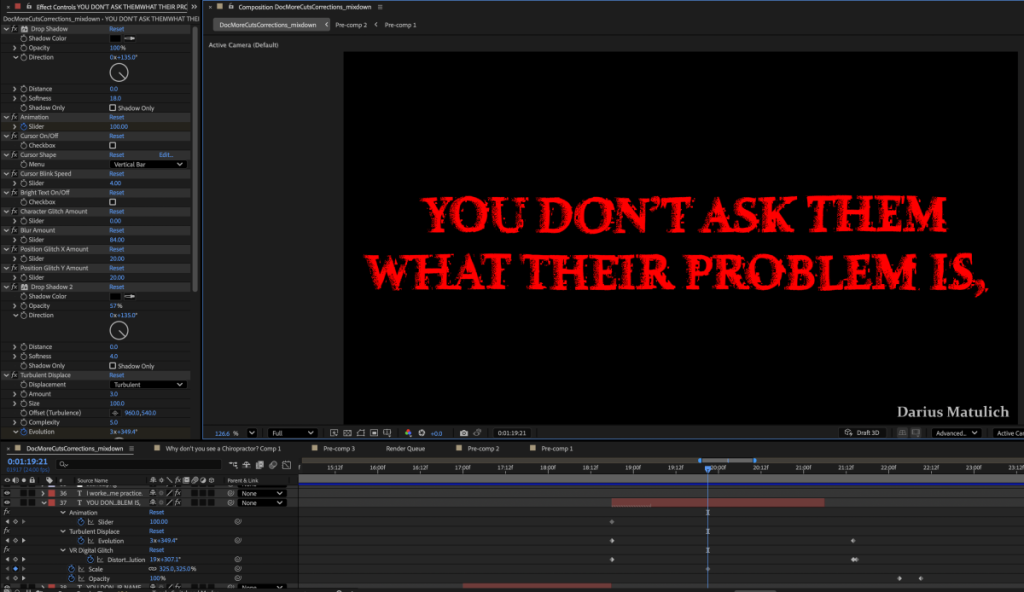
To keep my animation interesting, I opted for using effects. These effects range from mostly turbulent displace to make each scene feel more “lively”, but I also used other effects such as glow and VR digital glitch.
Overall, while this project was a hassle to finish, I think the outcome is decent enough. For the time given, I am pretty proud of it, but I wish I had more time to polish up the flaws in my effects and use a better character design then what’s shown.




Dr. Beth Aarhus
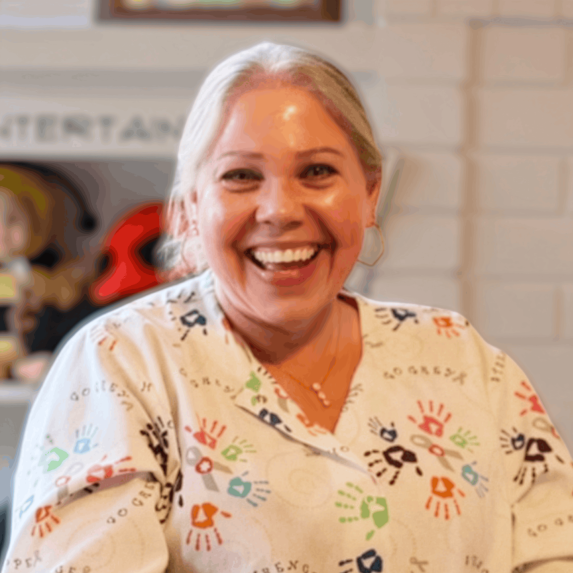
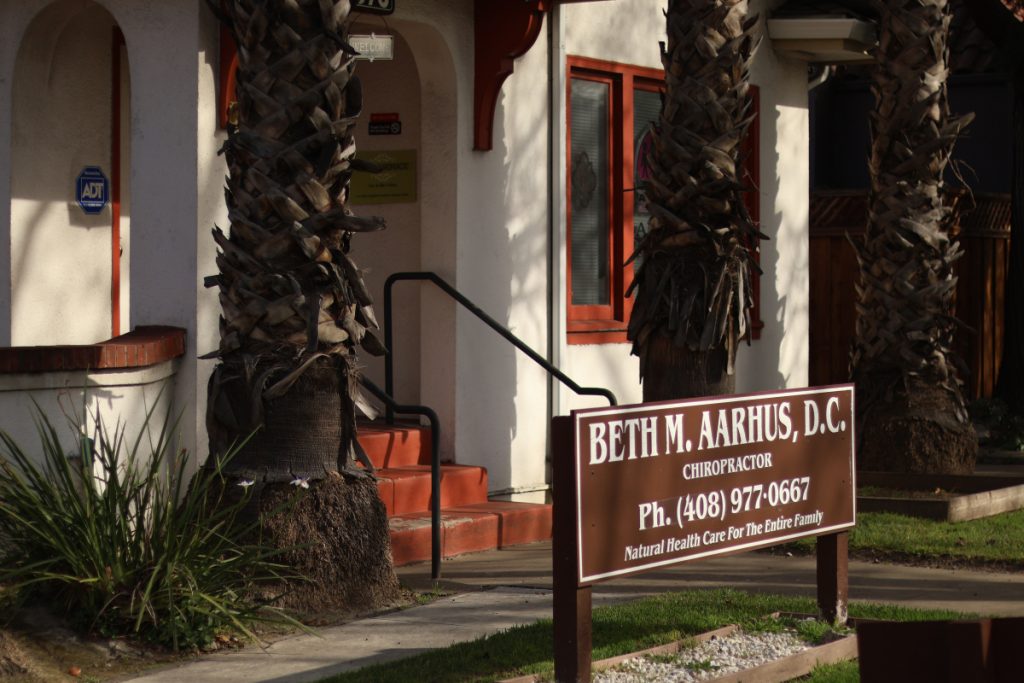
Dr. Beth is the owner of Aarhus Chiropractic, opening her clinic in April 2003. Dr. Beth was raised in Southern California, and worked toward her undergraduate degree at Fullerton College and Concordia University. Later in April 1995, she attended Graduate School at Palmer West Chiropractic, graduating in September 1999 and becoming a licensed chiropractor.
Dr. Beth lives in Pleasanton with her husband and three children, and invests her time as both a personal Chiropractor and a mother.


Natalia Aarhus
Natalia Aarhus is an Amador High School junior and the daughter of Dr. Beth Aarhus. Inspired by her mother, she wants to pursue a medical career path. Her sights are set on surgeon work, and her goal is saving a life in the future.
Currently, Natalia is a part of a bio-medical pathway at school. She was chosen to become a CPR instructor, earning her a Basic Life Support certification. Natalia is training teachers and students how to perform chest compressions. Natalia hopes that after she and her team members graduate, their program will have more people to continue their work in teaching CPR.


Reflection
The entire Documentary Process certainly was not an easy task. The Documentary has been the biggest school project I have worked on in my entire life so far, and I would not have it any other way. While it was a pain sometimes, especially with the situation right before the deadline where I had to quickly fix an error for publishing, the project has helped me grow as a person. I have developed not only software skills, such as with InDesign and Illustrator, but I have also developed something even more important: people skills. I have never done an actual in-person interview before, and learning that process is important to face real-life situations such as job interviews. The anxiety from the days leading up to the interview, while scary, is a real experience that I will have to master in adulthood, and I’m grateful that Freestyle Academy has given me this first opportunity.
Freestyle Academy’s unique structure of integrated classes has been really beneficial for making this project feel as important as it actually is. There is the entire article we have to write, but also the formatting and publishing of the article. In addition, we must record the entire interview for Animation class, which uses its own medium to showcase the Documentary project in a new way. Overall, this project has been a real experience in the best way possible, which I will remember for the rest of my life.