Introduction
In the Conceptual Project, juniors strengthen their ability to think abstractly and communicate creatively while exploring the question:
“How can I express myself using unconventional forms?”
The project encourages bold, artistic experimentation through poetry, music, visual art, animation, experimental film, and web design. Students are pushed to share their ideas using a unique personal style. Along the way, they also build technical communication skills by working with modern professional tools, including DSLR cameras, Tascam audio recorders, and software such as Adobe Photoshop, Animate, Premiere Pro, After Effects, Audition, Avid Pro Tools, WordPress, and Google Workspace.
My first project at Freestyle in the Conceptual Unit for English and Digital Media was a new kind of challenge for me. I had to think in more abstract ways and try out creative ideas I wasn’t used to. I also learned how to use a lot of professional tools like cameras, audio recorders, and different Adobe programs, which was exciting but also a bit overwhelming at first.
Even though I wasn’t always confident, experimenting with different forms like poetry, art, and digital media which helped me express myself in new ways. Overall, this project taught me to take creative risks and showed me what I’m capable of when I step out of my comfort zone.
SFMOMA Art Reflection Video
For the SF MOMA field trip and Art Reflection project, I chose The Visitors by Ragnar Kjartansson because it created a strong feeling of awe through its music and the way each performer was alone yet connected. In Digital Media, I used Premiere Pro to make a short animation that captured the mood of the piece, and in English I wrote about what made it so powerful to me. This project helped me think more deeply about art, improve my creative skills, and get better with the technical tools I used.

Working on the Art Reflection Video production was really valuable because it let me combine what I learned in both English and Digital Media. In English, I practiced thinking deeply about a piece of art and explaining why it inspired awe. In Digital Media, I got to turn those ideas into a visual story using Premiere Pro, which helped me improve my technical and creative skills. I appreciated being able to express my thoughts in different ways and see how writing and digital tools can work together to communicate an idea.
Parody Production

▶ Back to School (Still in July)
⏸ Back to School (Still in July)
This project was about creating a parody song based on an existing track. The goal was to express personal experiences in a fun, creative way through rewriting lyrics and producing the audio.
To produce my parody song, I started by rewriting the lyrics to fit my story. Then, I recorded my vocals using Adobe Audition, edited the audio by cutting mistakes, adding fades, and applying effects to make it sound professional.
Because I wanted to express how difficult it is to return to school after an amazing summer, I chose to make a parody of the song “Back to Friends” by Sombr. The song inspired me because its emotional and reflective vibe matched the feeling of being stuck between wanting to move on and holding onto the past. My parody is about struggling to focus on school while my mind is still in summer, especially remembering my trip to Barcelona and the freedom of July. At first, I focused on rewriting the lyrics to fit my own experiences, then I recorded my vocals in Adobe Audition by creating a multitrack session, setting the correct mono input, and recording multiple takes. After recording, I edited the clips by cutting mistakes, adding fades, adjusting volume levels, and using effects like reverb and compression to make the vocals sound cleaner and more polished. What I valued most about the process was learning how to properly record and edit audio and realizing how much patience audio production takes. During the process, I learned that reflecting on my experiences helped me write more meaningful lyrics. My message with my parody lyrics was about how hard it is to let go of summer and adjust back into school life, which is something many students can relate to. I am most proud of how honest and relatable my parody song is, and my proudest moment was listening to the final version and knowing I turned my emotions and experiences into a finished parody song.
Parody Lyrics
Verse 1:
Staring at my homework
Cause the feeling makes me stressed
Thinking ‘I’ll start later
Staring at my work, wishing it was summer
How can I go to back to school
When my mind is still stuck in July? (yeah)
How can I just go to school and pretend
Last summer never happened?
Verse 2:
It was last July
I was in Barcelona
I still remember
Not a care in the world, didn’t want to go back
How can I go back to school
When my mind is still stuck in July? (yeah)
How can I just go to school and pretend
Last summer never happened?
Bridge:
This part of my head
Won’t let me leave July
I’m stuck, I’m holding on so tight
While I try to let it go, it was months ago
Chorus:
How can I go back to school
When my mind is still stuck in July? (yeah)
How can I just go to school and pretend
Last summer never happened?
How can I go back to school
When my mind is still stuck in July? (yeah)
How can I just go to school and pretend
Last summer never happened?
I just want summer back
Oh yeah

Screenshot of Adobe Audition showing multiple vocal tracks, edits, and effects for a parody song production.


Photoshop Blend Mode Editing
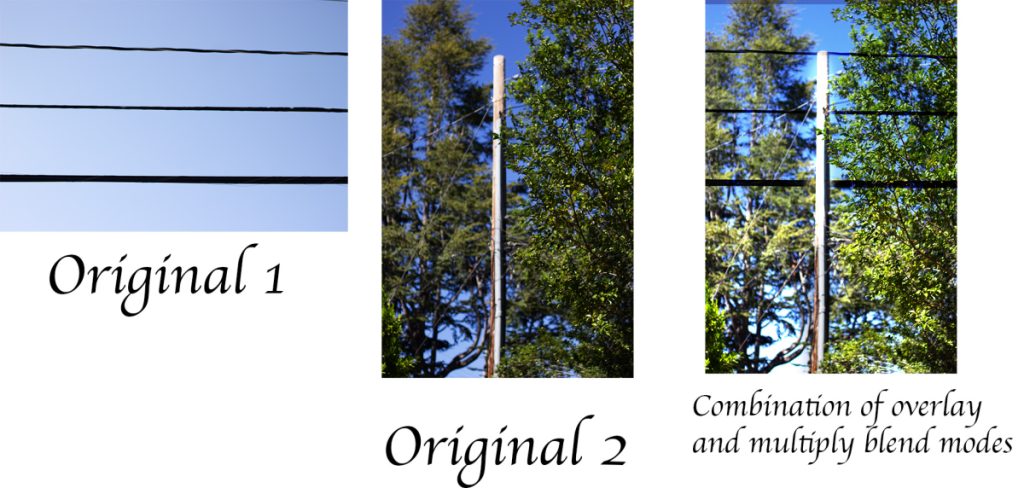
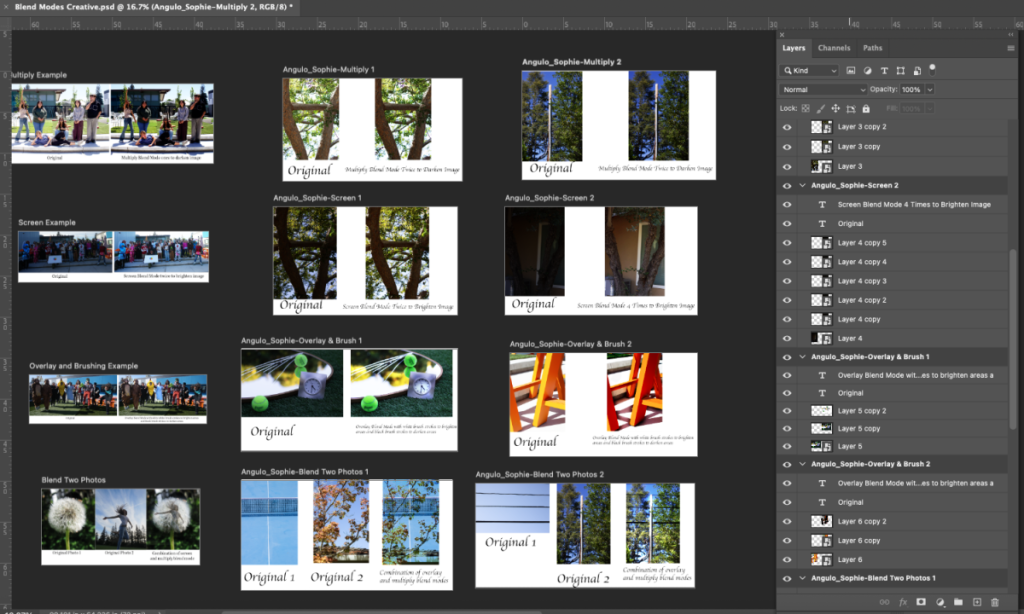
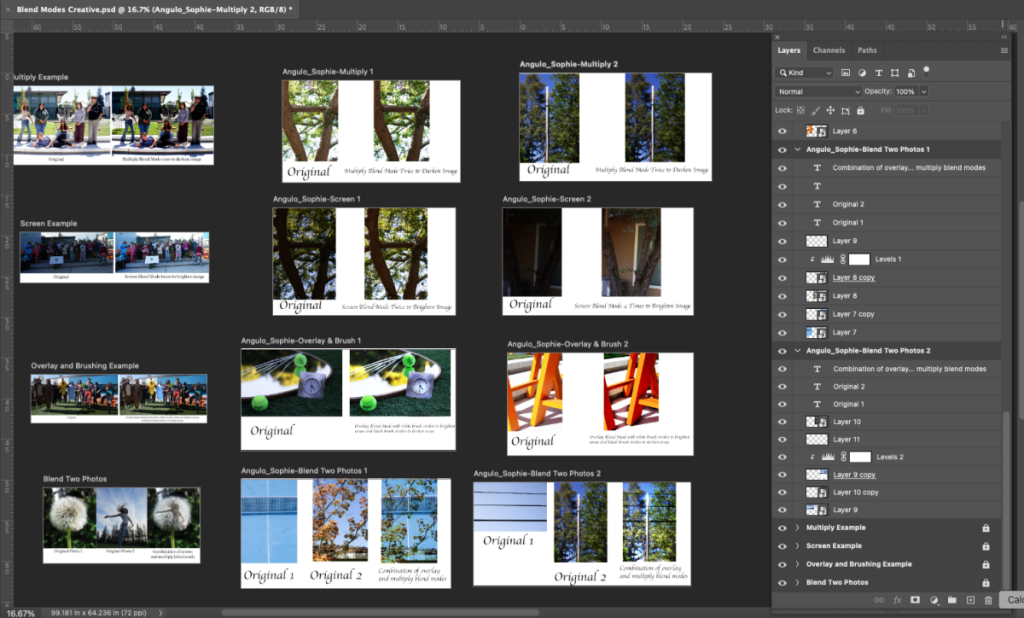
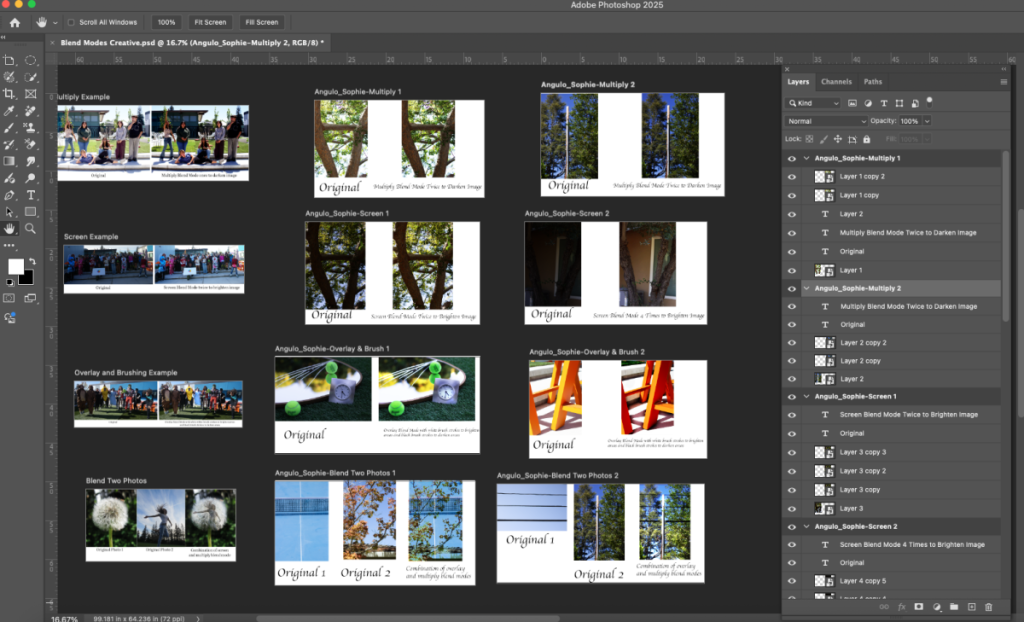
In this section, I’m showing my work from the Photoshop Blend Modes assignments in Digital Media. In these projects, I experimented with different blend modes to combine images in interesting ways and see how colors and layers interact. The goal was to play around with effects, make my images more creative, and get better at using Photoshop. This section shows how I learned new technical skills while also trying out different artistic ideas.
- What do you value about learning about and creatively using Photoshop Blend Modes?
I value learning Photoshop Blend Modes because they help me create unique visual effects that are really cool and interesting. - How do you see yourself using your new Photoshop skills with your creative projects? I see myself using these new Photoshop skills to enhance my projects with more creative, and expressive designs.



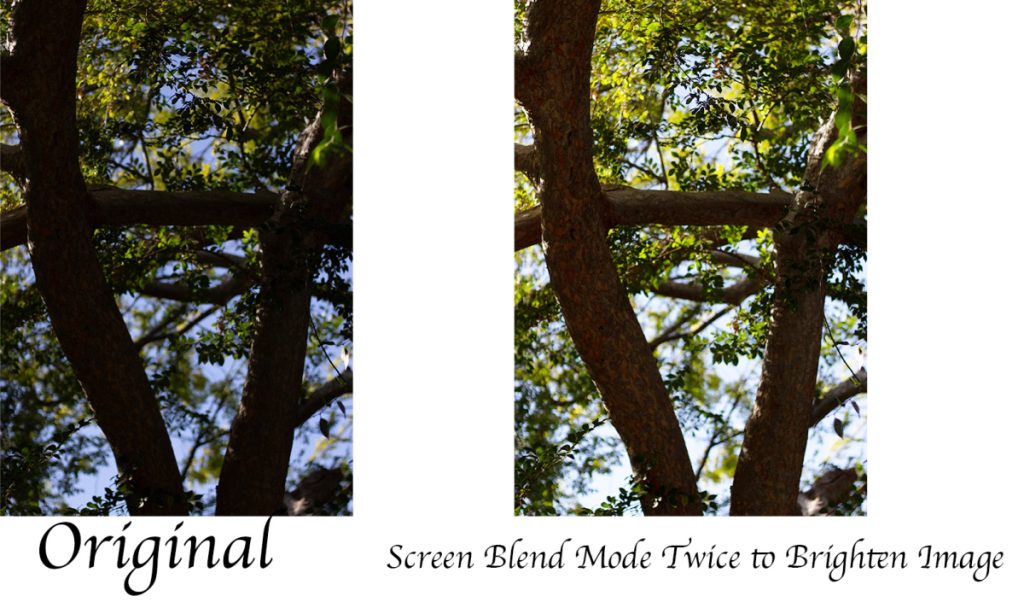
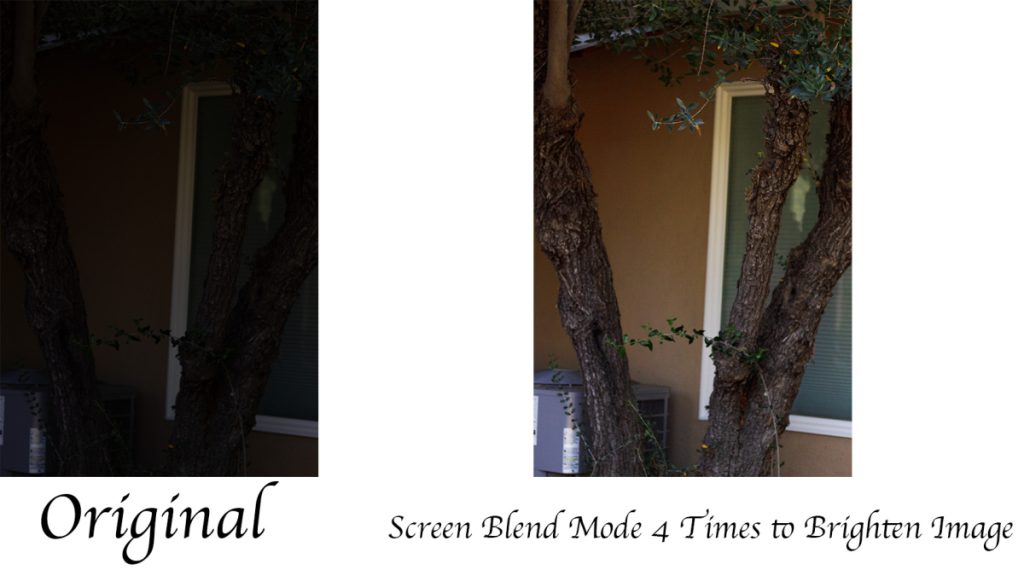
DSLR Photos
In this section, I’m sharing my work from the DSLR Practice sessions in Digital Media. These exercises helped me learn how to use different camera settings to create specific effects. I practiced Av mode to experiment with shallow and deep depth of field, Tv mode for long exposure night photography, and flash for portraits in front of backdrops. I also worked in P mode while changing ISO and experimented with altering White Balance to see how it affects color and mood. This section shows how I learned to control the camera and use technical settings to make my photos look the way I wanted.
Design
In Design, we work on learning the basics of art and building skills that help us express ideas visually. We explore elements like line, shape, color, texture, and space, and we learn how to use design principles to make our work stronger. We also get hands-on experience with digital tools such as Photoshop and Illustrator, as well as traditional skills like drawing, planning, and creating concepts. Through different projects, we practice observing, thinking creatively, and developing our ideas from start to finish.
My experience in Design has helped me become more confident and creative. I’ve learned that good design takes patience, attention to detail, and a willingness to experiment. What I value most about being a Design student is the chance to try new things, solve problems in creative ways, and express myself through my work. Design lets me see the world differently and pushes me to keep improving.
Alpha Name Photography
For the Alpha Name Photography project, we used a 24mm macro lens to search for natural objects that could form each letter of our name. Nothing could be man-made, so we had to look closely at branches, leaves, vines, and textures in nature to find shapes that looked like letters. After taking multiple photos for each letter, we edited our best ones in Photoshop by adjusting curves, cropping, and resizing. Finally, we arranged all the letters on a black background to create our finished name design.
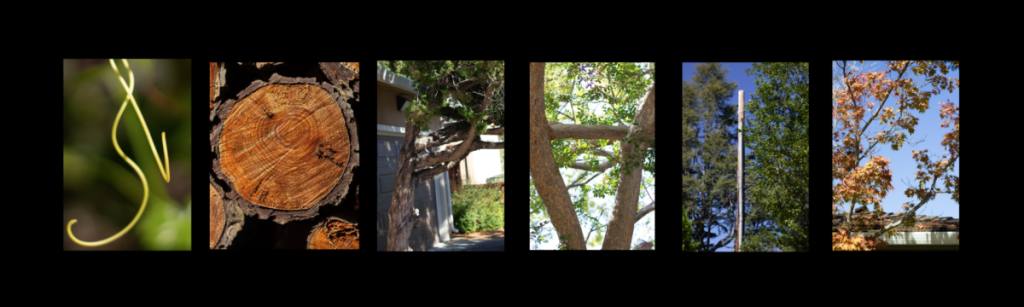
A collage of macro nature photos arranged to spell out my name, each letter formed by shapes found in tree branches, vines, and plants.

Screenshot of the Photoshop workspace with layers, adjustment tools, and the nature letter images visible during the editing process.
Conceptual Photo
The Conceptual Photo project focused on creating an image that expresses an idea using symbolism, metaphors, and intentional objects. Instead of taking a picture just to look nice, we had to plan out a deeper meaning and choose props that communicated a clear concept. We used lighting, composition, and editing to support our message and make the photograph visually strong while still showing the idea clearly.

A cracked mirror lying on grass with tennis balls reflected in it, a tennis ball in front, and a small silver clock placed next to the mirror.
In my photograph, I used a cracked mirror and a clock as the primary objects to convey the emotional experience of worry through losing a game. The cracked mirror symbolizes the shame and self-reflection that follow a loss, representing how I feel broken or ashamed of myself after losing a game. The clock, placed nearby, signifies worry, as the passing of time can intensify worry, especially during a competitive event. Together, these objects interact to create a narrative: the mirror reflects a fragmented self-image after failure, while the clock reminds me of the worry that comes with passing time. The two tennis balls in the background hint at the context of the loss, connecting the abstract emotions to the act of playing and losing a game, but they remain out of focus, so the viewer’s attention stays on the mirror and clock. I positioned the mirror on the ground and the clock in front of it, using soft, diffused lighting to enhance their reflective surfaces and cast gentle shadows that deepen the sense of tension. The background of grass reinforces the setting of a sports game and grounds the emotional symbolism. I took the photograph from a low, close-up perspective while lying on the ground, which emphasizes the objects and their textures. The angle emphasizes the mirror’s cracks and the clock’s hands, directly supporting my concept by visually representing the worry that comes specifically from losing a game.
For this photograph, I experimented with both photography and Photoshop to achieve the desired dramatic effect. In capturing the image, I learned how perspective, lighting, and depth of field can influence the mood and focus of a composition, especially when telling a story about personal emotions after losing a game. In Photoshop, I applied a vignette to draw attention toward the center of the image and to create a dramatic effect to emphasize the emotion of worry. I also added a cooling filter to give the scene a subdued, tense atmosphere. These edits reinforced the emotional weight of losing a gem and clarified the symbolic meanings of worry and shame. By combining careful photography techniques with precise digital edits, I was able to create a final composition that clearly communicates my conceptual statement.
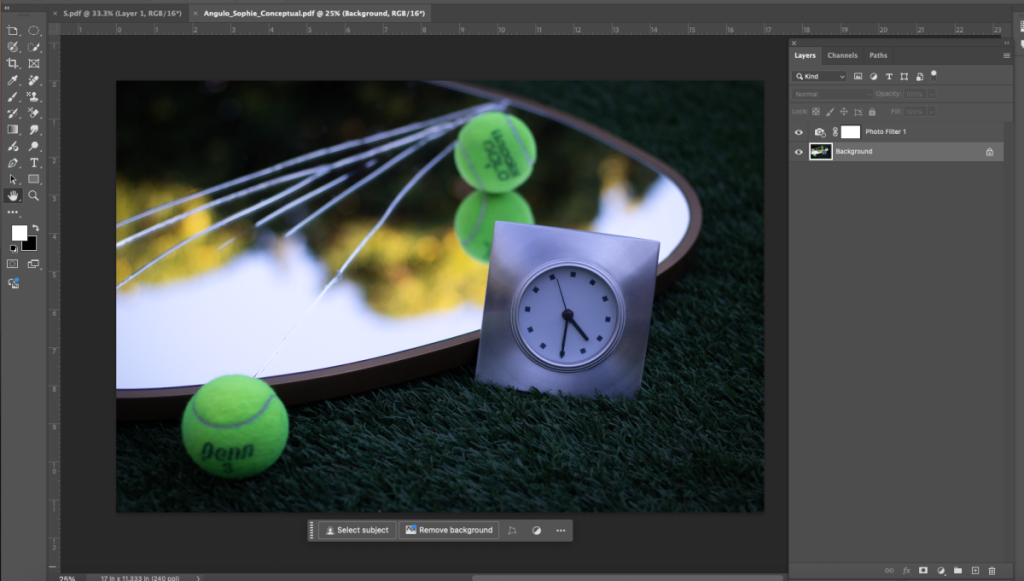
Screenshot of the Photoshop workspace with the conceptual photo open and layers visible.